
Milan is widely recognized as Italy’s economic powerhouse. It has a GDP per capita of around $55,000, which is double the national average. The city has established itself as a fashion capital, home to several high-end luxury brands. Beyond fashion, Milan has a well-developed financial sector, as well as advertising, design, and publishing centers.
Hamburg, Germany’s second-largest city and busiest port, ranks among the continent’s most affluent urban areas. It contributes close to 4% of the country’s total GDP. Hamburg has evolved into Germany’s media powerhouse. It is home to leading publishing firms, broadcasting networks, and video game developers.
Once an industrial port, Copenhagen has transformed into a dynamic knowledge-based hub. The city’s GDP per capita stands at around $65,000 to $70,000. The Greater Copenhagen area is now home to one of Europe’s leading life sciences hubs. It has a thriving design and architecture sector, along with shipping, technology, and innovation centers.
Sweden’s capital is an important financial and business powerhouse. It accounts for nearly 30% of the country’s total GDP. Known as the “unicorn factory,” Stockholm is renowned for producing a remarkable number of billion-dollar tech startups. The city also serves as a key financial center and the headquarters for many major corporations.
Moscow firmly holds its place as one of Europe’s wealthiest cities. It has a GDP ranging between $500 billion and $600 billion. The city has 74 billionaires, more than any other European city. It also has a sizeable millionaire population, with roughly 250,000 residents falling into that category.
Munich has a diverse and highly prosperous economy. It has a GDP per capita of around $75,702. Major companies, such as BMW in manufacturing and Allianz and Munich Re in finance, play a key role in Munich’s economic strength. In addition, the city also excels in the media and biotech sectors, as well as in research and technology.
Oslo has a significant share of Norway’s wealth. The city’s GDP per capita ranges between $80,000 and $85,000, reflecting its robust economic base. Norway’s prosperity is supported by key industries such as energy, technology, and shipping. The nation’s comprehensive social welfare system also boosts the overall quality of life.
Frankfurt is one of Germany’s wealthiest cities. Its GDP per capita falls between $65,000 and $70,000, well above the national average. The city’s economic strength is built around banking, financial services, and professional sectors. Frankfurt is home to several major institutions, including the European Central Bank, the German Bundesbank, and the Frankfurt Stock Exchange.
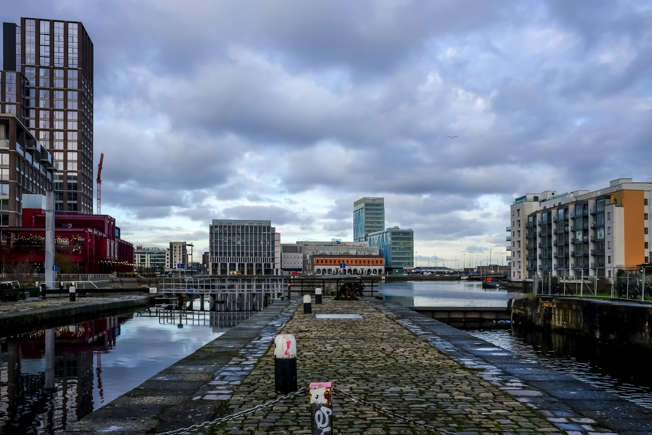
Dublin ranks among Europe’s wealthiest cities, mainly because of Ireland’s thriving economy and robust business environment. The Greater Dublin area has a GDP per capita of about $103,641, nearly 1.8 times the European Union average. Ireland is home to around a dozen billionaires, several of whom live in or near the capital. Dublin has also experienced an increase in its high-net-worth population, now hosting about 28,200 millionaires.
Though Geneva is somewhat smaller than Zurich, it matches its Swiss peer in per capita wealth metrics. The city emerged as a global center for private banking and trading, while being home to various UN agencies and the Red Cross. Geneva is home to six billionaires and approximately 74,200 millionaires. It stands out in the field of wealth management, with numerous global private banks in the city.
By nearly every indicator, Luxembourg is one of the wealthiest places in Europe. It holds the top spot in the European Union for the average GDP per capita at $155,000, which is more than twice the EU average. Luxembourg City’s wealth is due to the thriving financial sector. It ranks just behind London in asset management, with around 150 banks and thousands of investment funds operating within the city.
The economic hub and financial capital of Switzerland is the third-richest city in Europe. It has a GDP of $202 billion. Zurich is home to a significant share of the ultra-wealthy, with more than 100,000 millionaires living in the metropolitan area. In fact, about one in every six residents holds millionaire status in the city.
The second-richest city in Europe is Paris. The Paris Metropolitan area has a GDP of more than $1 trillion, the European Union’s largest urban economy. Paris is a global leader in the luxury goods and fashion industries, while also hosting the Eurozone’s second-largest banking hub. It is home to roughly 165,000 millionaires and around 43 billionaires.
The richest city in Europe is London. It has a GDP of $1.3 trillion, making it Europe’s largest urban economy. The city’s prosperity is largely driven by its role as a major global financial hub. It boasts around 227,000 millionaires, more than any other city in Europe, along with approximately 62 billionaires calling it home.
Sources: (CitizenX) (Q Wealth Report) (WorldlistMania)
