
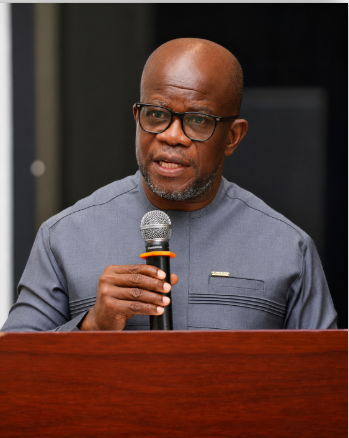
The Director-General of the State Interests and Governance Authority (SIGA), Professor Michael Kpessa-Whyte, has called for increased investment in professional coaching for boards of directors to strengthen corporate governance, improve institutional performance and ensure effective oversight.
He said the appointment of individuals to governing boards did not automatically confer the competence required to exercise effective leadership, stressing the importance of continuous learning and professional development.
Speaking as the Special Guest of Honour at the Berkha Africa Coaching Soirée 2026 at the Kempinski Hotel Gold Coast City, Accra, on Sunday, November 29, 2026, Prof. Kpessa-Whyte noted that the growing demands of corporate governance required board members to continually sharpen their skills and broaden their knowledge.
The programme, organised by Berkha Africa under the theme, “Leading Institutions That Learn,” brought together directors of public and private institutions, chief executives, board chairs, professional coaches and leaders from various organisations.
The SIGA Director-General observed that leadership development programmes were often concentrated on management and staff, with little attention given to the professional development needs of board members.
He explained that directors were increasingly required to navigate complex business environments, manage competing interests, scrutinise management decisions and provide strategic direction without interfering in the day-to-day operations of institutions.
“The quality of governance in any institution will never rise above the quality of thinking around its board table,” he stated.
Prof. Kpessa-Whyte said professional coaching could enhance strategic thinking, improve the quality of boardroom discussions and equip directors to make difficult decisions in the best interests of their organisations.
“If we want better institutions, we must invest in better boardrooms,” he added.
Protecting Public Assets
Prof. Kpessa-Whyte said the need for effective boardroom leadership was particularly important for state-owned enterprises, given their responsibility for managing significant national assets.
He maintained that leaders of state enterprises must demonstrate the commercial discipline expected of private businesses while remaining accountable to the public.
“Public assets deserve private-sector discipline and public-spirited leadership,” he emphasised.
He noted that SIGA was committed not only to monitoring the performance of state enterprises but also to strengthening the governance and leadership capacities of the institutions under its oversight.
According to him, monitoring institutional performance without building the capacity of leaders to achieve the desired results was inadequate.
Prof. Kpessa-Whyte encouraged boards, chief executives and institutional leaders to incorporate professional coaching into their governance structures to promote continuous learning, accountability and organisational excellence.
He stressed that coaching should not be treated as a one-off event but as an integral part of institutional leadership and development.
The SIGA Director-General also commended Berkha Africa for providing a platform for leaders and professional coaches to exchange ideas on effective leadership and institutional transformation.
He maintained that Ghana’s future development would depend not only on the resources available to the country but also on the quality of its leaders.
