
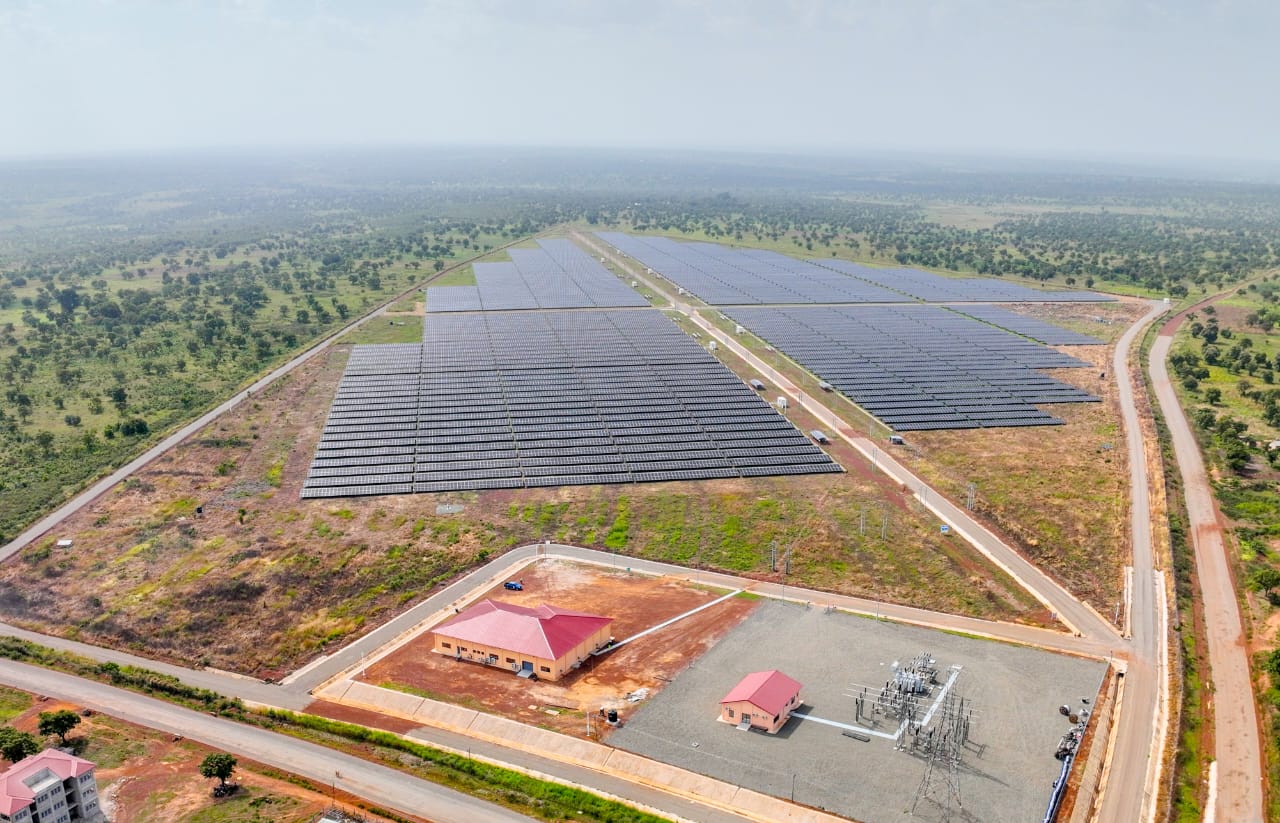
The successful completion of the 50-megawatt (MW) Yendi Solar Power Plant by First Sky Limited has highlighted the growing role of Ghanaian-owned businesses in delivering major infrastructure projects and advancing the country’s renewable energy agenda.
The project, undertaken on behalf of the Bui Power Authority (BPA), was conceived, designed and executed using local expertise, according to Charles Edem Gidi, Chairman of the Project Implementation Team and Director of Finance at First Sky Group.
The facility is now connected to Ghana’s national electricity grid and fully operational, following the completion of commissioning procedures.
The development came to the fore on Monday, October 26, 2026, when the Parliamentary Select Committee on Energy and Mines, led by its Chairman, Emmanuel Kwasi Bedzrah, visited the facility.
The committee commended First Sky Limited for demonstrating Ghanaian engineering capabilities in the execution of a major renewable energy project.
Local Expertise at Work
Mr. Gidi described the project as a model for future renewable energy developments, demonstrating that Ghanaian companies and professionals can deliver complex energy infrastructure.
First Sky Group, a wholly Ghanaian-owned company with experience in road construction and civil engineering, executed the project in partnership with the Bui Power Authority.
The plant occupies approximately 140 acres in the Yendi Municipality of the Northern Region.
According to Mr. Gidi, the facility was technically ready on September 11, 2026, before undergoing commissioning tests and being connected to the national grid.
The grid connection was undertaken by the Ghana Grid Company Limited (GRIDCo) through a four-kilometre, 161-kilovolt transmission line linking the plant to the Tamale-Yendi transmission network.
The project also underscores the role of financial institutions in supporting large-scale renewable energy investments.
Republic Bank and Zenith Bank received commendation from the parliamentary committee for providing financial support that contributed to the project’s successful completion.
Representatives of the banks said their participation reflected confidence in First Sky Limited’s technical capacity and track record, as well as their commitment to Ghana’s transition towards cleaner energy.
The partnership between the project developer, the Bui Power Authority and the financing institutions demonstrates the importance of collaboration in mobilising the expertise and capital required for energy infrastructure development.
Potential Benefits for Yendi
Beyond its contribution to electricity generation, the project is expected to create opportunities for local economic activity and employment within the Yendi Municipality and surrounding communities.
Members of the Parliamentary Select Committee on Energy and Mines highlighted the facility’s potential to support economic development in the Yendi Constituency.
However, they emphasised that adequate security, routine maintenance and effective management would be essential to protecting the investment and ensuring its long-term sustainability.
Yendi Municipal Chief Executive Sugri Muniru pledged the Assembly’s commitment to safeguarding the facility, preventing theft and protecting the project land against encroachment.
Supporting Ghana’s Energy Future
The committee’s Chairman, Emmanuel Kwasi Bedzrah, praised First Sky Limited and the Bui Power Authority for their partnership, describing the project as an important contribution to Ghana’s renewable energy infrastructure.
Meanwhile, Bui Power Authority Director of Engineering Peter Acheampong disclosed that the authority expected to have installed approximately 300MW of power capacity within the Bui enclave by the end of 2026.
He described the Yendi facility as the authority’s first major solar project outside the enclave and expressed confidence in its contribution to electricity supply reliability in northern Ghana.
The completion of the plant represents not only an addition to Ghana’s renewable energy capacity but also an example of how Ghanaian expertise, financial-sector support and public-private collaboration can contribute to national infrastructure development.
