
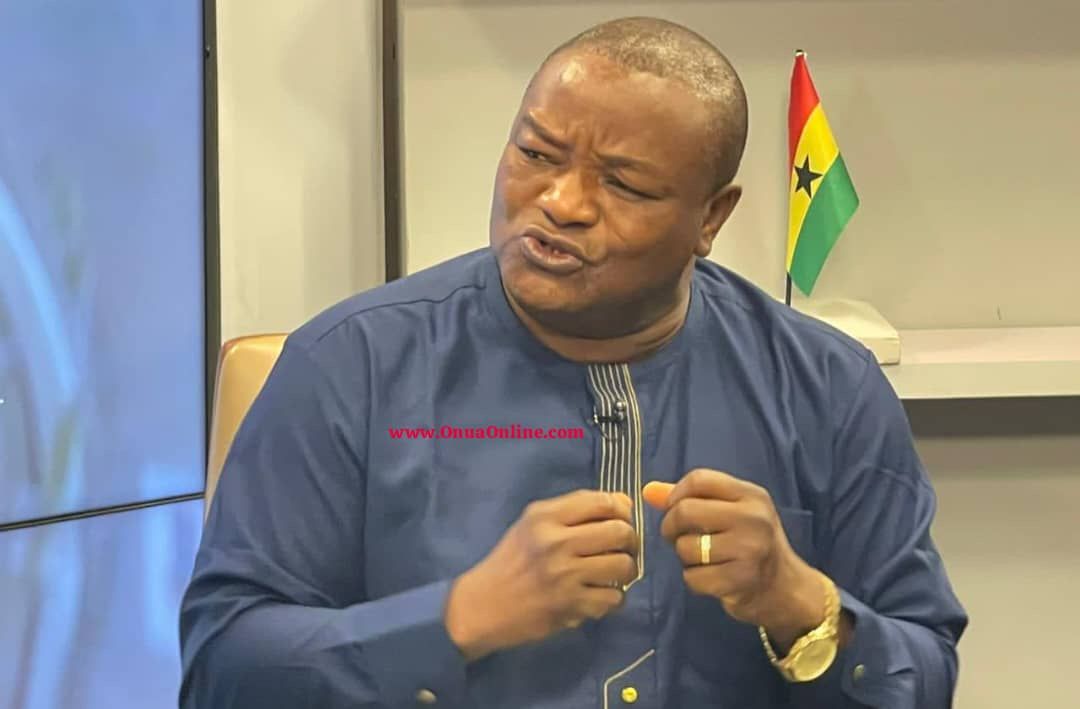
Founder and Leader of the All People’s Congress (APC), Dr. Alhaji Hassan Ayariga, has questioned the decision by President John Dramani Mahama’s government to pursue Ghana’s membership of BRICS without parliamentary and public consultation.
In a press statement issued on 17th October 2026 in Accra, Dr. Ayariga said while Ghana must explore economic opportunities, it must not undermine constitutional governance and democratic accountability.
He argued that Ghana is a constitutional democracy where sovereignty resides in the people, and cited Article 75 of the 1992 Constitution which requires treaties, agreements and conventions to be ratified by Parliament.
According to him, Cabinet has no constitutional basis to approve or ratify such binding commitments alone.
Dr. Ayariga further asked what exactly Ghana stands to gain as BRICS has expanded beyond its original members, whether Ghana will be a full member or partner, its financial obligations, and how ordinary Ghanaians will benefit.
He warned that Ghana must not exchange dependency on Western powers for dependency on Eastern powers, insisting that gold, oil, minerals and strategic infrastructure must remain instruments of national development under the principle of Ghana First.
He called on the Speaker and leadership of Parliament to demand a comprehensive briefing from Foreign Minister Samuel Okudzeto Ablakwa and posed seven direct questions to President Mahama, including why Parliament was not consulted, whether the Attorney General has given a legal opinion, and whether government will publish the terms before any binding commitment.
As his position, he demanded that government publish a policy document on BRICS, present the matter to Parliament, engage in broad national consultation, disclose legal assessments, and guarantee protection of Ghana’s economic independence and sovereignty.
He concluded: “GHANA IS NOT FOR SALE. GHANA BELONGS TO GHANAIANS.”
*BELOW IS THE FULL STATEMENT:*
*PRESS STATEMENT*
*GHANA’S PROPOSED MEMBERSHIP OF BRICS: WHO GAVE CABINET THE AUTHORITY TO DECIDE FOR OVER 34 MILLION GHANAIANS WITHOUT PARLIAMENTARY AND PUBLIC CONSULTATION?*
*BY DR. ALHAJI HASSAN AYARIGA*
*FOUNDER AND LEADER, ALL PEOPLE’S CONGRESS (APC)*
*17th OCTOBER 2026 | ACCRA, GHANA*
*GHANA IS A SOVEREIGN DEMOCRATIC REPUBLIC, NOT THE PERSONAL PROPERTY OF A PRESIDENT OR HIS CABINET.*
I have followed with considerable concern recent media reports and television discussions concerning the decision by the government of President John Dramani Mahama, through his Cabinet and Minister for Foreign Affairs, Hon. Samuel Okudzeto Ablakwa, to pursue Ghana’s participation in BRICS.
As a concerned Ghanaian citizen, a politician, and the Founder and Leader of the All People’s Congress (APC), I believe this development raises fundamental questions about our constitutional democracy, national sovereignty, parliamentary authority and the right of the Ghanaian people to participate in decisions affecting the future of our country.
Let me state clearly that I am not necessarily opposed to Ghana establishing strategic economic and diplomatic relationships with BRICS countries.
Indeed, Ghana must explore every legitimate opportunity to strengthen its economy, expand international trade, attract responsible investment, create employment and promote national development.
However, the pursuit of economic opportunities must never become an excuse to undermine constitutional governance, parliamentary oversight and democratic accountability.
*1. MR. PRESIDENT, GHANA BELONGS TO GHANAIANS, NOT TO THE PRESIDENT.*
Ghana is a constitutional democracy governed by the 1992 Constitution.
Article 1(1) clearly establishes that sovereignty resides in the people of Ghana, in whose name and for whose welfare the powers of government are exercised.
This fundamental constitutional principle must guide every major national decision.
My question to President John Dramani Mahama is simple:
Who has the authority to determine Ghana’s long term international economic and geopolitical commitments? Can the President do so without the approval of Parliament and the Ghanaian people?
If the President and his Cabinet believe that joining BRICS is in Ghana’s national interest, why should such an important decision not be subjected to broader national discussion?
Why should Parliament, the constitutional representative of the Ghanaian people, not be formally engaged in examining the implications of this proposed relationship?
Why should civil society, political parties, economic institutions, the business community and other national stakeholders not be given an opportunity to contribute?
Mr. President, Democracy is not simply about elections every four years.
Democracy is about accountability, transparency, consultation, constitutional responsibility and participation of the sovereign people in the governance of the country. Fundamental political, economic, legal, and social policies must emanate from the people. The sovereign people of Ghana must make the decisions to be executed or implemented by the arms of government.
*2. WHAT DOES ARTICLE 75 OF OUR CONSTITUTION SAY?*
Mr. President, I wish to draw your attention to Article 75 of the 1992 Constitution.
Article 75(1) empowers the President to execute or cause to be executed treaties, agreements and conventions in the name of Ghana.
However, Article 75(2) requires such treaties, agreements and conventions to be ratified by Parliament, either through an Act of Parliament or a resolution supported by more than half of all Members of Parliament, before they become binding.
I acknowledge that the Constitution also gives the executive responsibility for the conduct of foreign policy and empowers Cabinet to assist the President in the performance of his duties.
Nevertheless, Cabinet’s authority to formulate policy must not be confused with the constitutional requirements governing binding international agreements.
Mr. President, you must therefore place this matter before Parliament for the deliberations and decision of Parliament and the people. The contents, implications and benefits must be made clear to Ghanaians before membership. Continuity and sustainability of the proposed BRICS relationship are key considerations which cannot be left to the decision of just a party in power.
Will Ghana be required to sign any binding agreement? Which organ of State commits Ghana to such agreements and laws?
Will there be financial contributions, economic commitments, diplomatic obligations or other conditions? Who provides the finance?
Will Ghana’s participation require parliamentary ratification under Article 75?
These are legitimate constitutional questions that deserve clear answers.
Cabinet has neither constitutional nor legal basis for the approval or ratification of any such commitments.
*3. WHAT EXACTLY IS GHANA JOINING?*
BRICS originally brought together Brazil, Russia, India and China, with South Africa subsequently joining the grouping.
The organization has since expanded to include additional countries.
Interestingly, despite this expansion, the name BRICS has remained unchanged.
Now that Ghana is seeking to participate, I ask:
What exactly does Ghana stand to gain?
What obligations will Ghana assume?
What are the potential economic, political and diplomatic consequences?
Will Ghana become a full member or merely a partner country?
What are the differences between these categories?
Will Ghana have meaningful influence in decision making, or will we simply become another participant in an international grouping dominated by larger economies?
And most importantly, how will ordinary Ghanaian citizens, farmers, traders, manufacturers, entrepreneurs and businesses benefit?
These questions cannot be dismissed as political opposition.
They are questions of national interest.
*4. GHANA MUST NOT EXCHANGE ONE FORM OF ECONOMIC DEPENDENCE FOR ANOTHER.*
For decades, African countries have struggled with economic dependency, foreign control of strategic resources, unequal trade relationships and limited industrial development.
We must not repeat the mistakes of the past.
If Ghana seeks to join BRICS to diversify its international relationships, that objective must translate into tangible benefits for Ghanaian citizens and businesses.
We must ensure that our gold, oil, minerals, agricultural resources, industrial opportunities and strategic infrastructure remain instruments of national development.
We cannot continue exporting our raw materials cheaply, importing finished products at enormous costs and allowing foreign interests to dominate strategic sectors of our economy.
Ghana must not move from dependency on Western economic powers into a new dependency on Eastern economic powers.
Whether our partners come from Europe, America, Asia, the Middle East or elsewhere, the guiding principle must remain the same:
*GHANA FIRST. GHANAIANS FIRST. NATIONAL INTEREST FIRST.*
International cooperation must strengthen our sovereignty, not weaken it.
*5. PARLIAMENT MUST NOT BECOME A SPECTATOR IN NATIONAL DECISION MAKING.*
I call upon the Speaker of Parliament, the Majority and Minority leadership, and all Members of Parliament to take a keen interest in this matter.
Parliament must demand a comprehensive briefing from the Minister for Foreign Affairs concerning the proposed BRICS partnership.
The government should present the economic justification, anticipated benefits, possible risks, financial implications and legal obligations associated with Ghana’s proposed participation to Parliament for determination by Ghanaians through their elected representatives.
Where the arrangement constitutes a treaty, agreement or convention within the meaning of Article 75, the necessary constitutional ratification procedures must be followed.
Even where parliamentary ratification is not legally required, a matter of this national significance deserves parliamentary debate and public scrutiny.
We must reject the dangerous notion that once a party wins an election, it acquires unlimited authority to make every major national decision without national debate and collective decision.
A President is elected to lead the people to govern themselves, not to dictate to the people.
*6. MY DIRECT QUESTIONS TO PRESIDENT JOHN DRAMANI MAHAMA*
Mr. President, I respectfully ask:
1. Why was the decision to pursue BRICS participation announced without first providing Ghanaians with a comprehensive explanation of its implications?
2. Was Parliament formally consulted before the decision was announced ?
3. Has the Attorney General provided a legal opinion on whether Ghana’s eventual participation will require parliamentary ratification?
4. What specific economic advantages will Ghana obtain from BRICS that cannot be achieved through our existing bilateral and multilateral relationships?
5. What guarantees will protect Ghanaian businesses, local industries, natural resources and strategic national interests?
6. Will the government publish the proposed terms and conditions of Ghana’s participation before undertaking any binding commitments?
7. Will the government undertake broader national consultations before proceeding to any final agreement?
These are not unreasonable demands.
They are the legitimate expectations of citizens living in a constitutional democracy.
*7. MY POSITION AND CALL TO GOVERNMENT*
As Founder and Leader of the All People’s Congress, I call on the government to:
*FIRST:* Publish a comprehensive policy document explaining the objectives, benefits, risks and obligations associated with Ghana’s proposed BRICS participation.
*SECOND:* Present the matter to Parliament for appropriate debate, scrutiny and any constitutionally required approval.
*THIRD:* Engage political parties, civil society organizations, economic experts, business associations and other stakeholders in a transparent national consultation.
*FOURTH:* Obtain and disclose the relevant constitutional and legal assessment of Ghana’s proposed commitments.
*FIFTH:* Guarantee that any BRICS arrangement will protect Ghana’s economic independence, national sovereignty and the interests of Ghanaian citizens.
*CONCLUSION: GHANA IS BIGGER THAN ANY PRESIDENT, CABINET OR POLITICAL PARTY.*
Mr. President, Ghana belongs to all of us.
The Constitution is supreme.
Our sovereignty is not negotiable.
Our democracy must be protected. Our
Parliament must be respected.
And our people must never be treated as spectators in decisions that could shape their economic and political future.
Let me emphasize that international partnerships are not inherently wrong. What matters is whether they serve our national interest and comply with our constitutional requirements.
I therefore challenge the government to demonstrate that Ghana’s proposed BRICS participation is transparent, economically beneficial and constitutionally sound.
If Ghana’s participation requires a binding international agreement,
The people of Ghana deserve answers before any final commitments are made.
GHANA IS NOT FOR SALE.
GHANA IS NOT THE PROPERTY OF ANY GOVERNMENT, PRESIDENT OR PARTY.
*GHANA BELONGS TO GHANAIANS.
And no matter who occupies the presidency, the Constitution must remain supreme.
GOD BLESS OUR HOMELAND GHANA.
*GOD BLESS THE PEOPLE OF GHANA.
……..Signed……..
DR. ALHAJI HASSAN AYARIGA
Founder and Leader
All People’s Congress (APC)
