
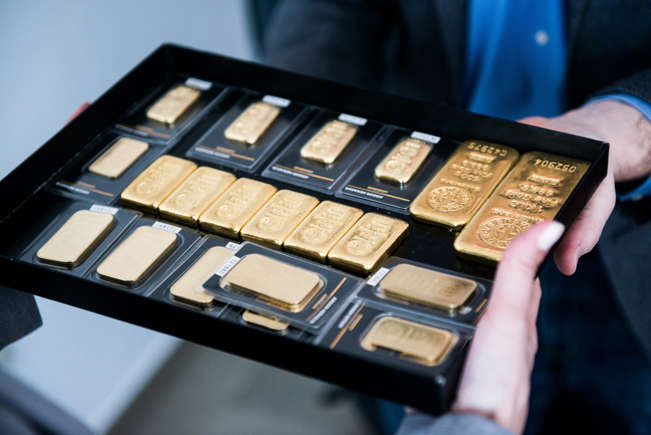
Central banks are the financial engines of nations, acting as the ultimate guardians of economic stability. Unlike regular commercial banks that serve individuals and companies, these institutions serve governments and the banking system itself. In the last five years, their role has been crucial in stabilizing economies.
They have taken measures to stimulate the global economy during and after the pandemic, only to spend the years that followed fighting a war against the resulting inflation. Their power lies in the total value of assets they hold, ranging from government bonds and foreign currencies to gold. These assets allow them to control interest rates, stabilize currencies, and bail out failing sectors and even entire nations.
This gallery explores the 15 wealthiest central banks, revealing how they amassed such staggering fortunes and how they invest their billions to keep the world turning. Curious? Click to know more.
All figures in USD.
Based in Mexico City, Banxico, or Banco de México, has total assets worth $296 billion. It is a reputed bank in international markets, known for its prudent management. It navigated the post-pandemic era by maintaining high interest rates, which attracted foreign investment. This has led to the Mexican peso being appreciated significantly against the dollar.
The Narodowy Bank Polski (NBP) in Warsaw has assets worth $303 billion. Established in 1945, it regulates the issuing of the country’s currency: the Polish złoty. In 2024 and 2025, it was the world’s leading buyer of gold. About 22% of its total reserve is in the form of gold.
The Bank of Thailand (BOT), located in Bangkok, owns assets worth $309 billion. It invests its reserves in major global currencies and bonds to maintain the stability of the baht’s value. The BOT has been grappling with a competitiveness crisis and a volatile Thai baht. It has faced a turbulent few years, dealing with a slow post-COVID tourism recovery, which has led to lower foreign exchange reserves and slower economic growth.
The Bank of Korea (BOK) in Seoul manages the finances of a highly industrial, export-driven nation. Its assets worth $410 billion are largely comprised of foreign exchange reserves needed to smooth out the volatility of the Korean won. It invests these reserves in a diversified portfolio of global government bonds, corporate debt, and increasingly, equities to boost returns. In December 2025, its forex reserve holding shrank at the steepest rate in 28 years.
The Saudi Central Bank, known as SAMA, is based in Riyadh and serves as the vault for the Kingdom’s immense oil wealth. Its total assets are worth $515 billion. For decades, SAMA has invested surplus oil revenues into safer assets like the US Treasury bonds. With hundreds of billions of dollars invested, it generates income from the interest on such bonds.
The Hong Kong Monetary Authority (HKMA) has $534 billion in total assets. It invests in a mix of global bonds and equities, operating similarly to a sovereign wealth fund. Unlike most central banks, which issue currencies of all denominations, the HKMA only issues 10 Hong Kong dollar banknotes. The Hongkong and Shanghai Banking Corporation (HSBC), Standard Chartered Bank, and Bank of China (Hong Kong) are responsible for providing the remaining denominations.
The Monetary Authority of Singapore (MAS), established in 1971, has assets worth $610 billion. It is unique because it uses the exchange rate, rather than interest rates, as its main tool to control inflation. When the currency gets too strong or too weak, MAS buys or sells assets to steer it back on course. Additionally, it invests in foreign assets, such as US Treasuries and other high-quality sovereign bonds.
The Banco Central do Brasil, headquartered in the capital of Brasília, manages assets worth $898 billion. For years, it has been forced to hike interest rates while battling high inflation. Its large asset base consists mostly of international reserve currencies, mainly dollars, and domestic government securities. In 2021, the then-Brazilian government granted formal autonomy to the bank, freeing it from political pressures and allowing it to better regulate the economy.
The Reserve Bank of India (RBI), located in Mumbai, is known for its stability amidst emerging market volatility. Its assets have grown to $911 billion over the years. The RBI has been one of the largest buyers of gold, adding tons of the precious metal to its vaults to diversify away from paper currencies. Its judicious management of assets and investments has helped India remain one of the fastest-growing major economies.
The Bank of England, known as the Old Lady of Threadneedle Street, has stood in the heart of London for centuries. In the last five years, it has overcome the economic shocks of Brexit and the pandemic, and the brief financial chaos caused by the mini-budget crisis of 2022. It has amassed more than a trillion dollars in assets, largely by buying UK government bonds. Its primary focus remains on keeping the British pound stable and the banking system secure.
The Swiss National Bank (SNB), based in Zurich and Bern, has assets worth $1.1 trillion. The SNB prints francs and uses them to buy foreign assets, including billions of dollars in US tech stocks like Apple and Amazon. The bank is actually a publicly traded company, with shares listed on the Swiss stock exchange. Despite recent losses, its massive reserves of gold and foreign currency ensure the Swiss franc remains a global safe haven.
The Bank of Japan (BOJ) in Tokyo, with total assets worth more than $4.5 trillion, is famous for being the global outlier. It has maintained lenient monetary policies long after everyone else tightened. For years, it used a policy called Yield Curve Control, buying almost every Japanese government bond to keep interest rates near zero. It also invests directly in the stock market via Exchange Traded Funds (ETFs), making it one of the biggest owners of Japanese companies.
The Federal Reserve, operating out of Washington, D.C., owns assets worth more than $6.5 trillion. It is one of the most powerful economic institutions on Earth. Its ability to print the world’s reserve currency gives it unlimited financial power. It also contributes tens of billions in profits to the US Treasury every year, earned from interest on the government debt it owns.
The People’s Bank of China (PBOC), headquartered in Beijing, wields immense influence over the world’s second-largest economy. It is also the second-largest central bank in the world, with assets totalling $6.6 trillion. Unlike some of its Western counterparts that focus heavily on government bonds, the PBOC holds huge volumes of foreign exchange reserves, primarily US dollars. It is also one of the world’s aggressive buyers of gold, diversifying its assets away from the dollar.
Based in Frankfurt, Germany, the European Central Bank (ECB) holds assets worth $7.2 trillion. It manages the euro for 21 member countries, making it a supergiant of central banks. The ECB primarily invests in sovereign debt and corporate bonds of Eurozone nations to ensure financial stability. It earns income through interest on these bonds and the interest commercial banks pay when they borrow money.
Source: (Sovereign Wealth Fund Institute) (Bank for International Settlements) (Visual Capitalist)
